
America at 250
Democracy Under Stress, Not Defeat

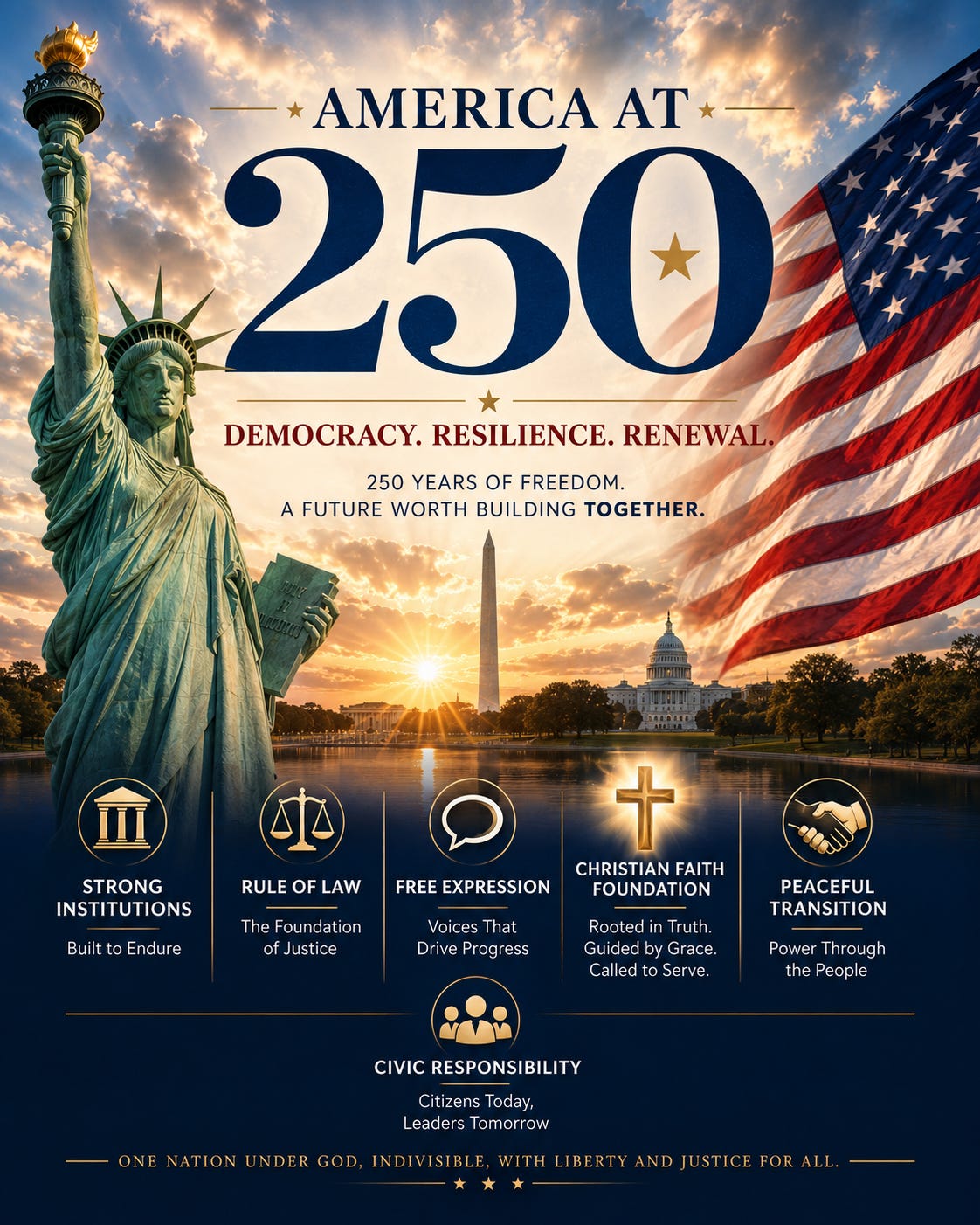
As the United States marks 250 years of independence, the anniversary is more than a national celebration—it is a geopolitical indicator. The world's most influential democracy enters its next quarter millennium, facing unprecedented strategic competition abroad and deep political polarization at home.
The United States has endured civil war, economic depressions, global conflicts, terrorist attacks, and repeated constitutional crises without abandoning its democratic order. That institutional resilience, not military power alone, has been the bedrock of its global influence.
Yet the American model is under increasing pressure. Political polarization, declining trust in institutions, disinformation, fiscal pressures, technological disruption, and intensifying rivalry with China are factors testing the capacity of its democratic system to govern effectively. While allies are watching for continuity, adversaries are looking out for weakness.
The central question is no longer whether democracy is flawless. It is whether democratic institutions can continue to adapt faster than the challenges confronting them. History suggests they can—but only when institutions remain stronger than personalities, and when the rule of law prevails over political expediency.
For emerging democracies, the strategic lesson is clear: democratic resilience is built over decades, not election cycles. Constitutions matter, but independent courts, professional civil services, a politically neutral military, credible electoral institutions, and a free press are signposts that preserve stability during periods of national stress.
Authoritarian systems often project efficiency and decisiveness, but they frequently conceal systemic weaknesses until they erupt into crisis. Democracies expose their divisions publicly, allowing for debate, accountability, and peaceful political correction. Whereas openness may appear chaotic, it is also a source of long-term resilience.
At 250, the United States remains the world's most consequential democratic experiment. Its future will shape global confidence in democratic governance, influence alliance structures, and affect the strategic balance between democratic and authoritarian models throughout the twenty-first century.
Strategic Assessment:
America's greatest strategic advantage is not merely its military or economic power. It is the durability of institutions capable of absorbing political shocks while preserving constitutional continuity. Whether that advantage endures will have implications far beyond the United States, influencing the future trajectory of democracy across the international system.